Waterfront living in Fort Lauderdale sounds simple until you start looking at what “waterfront” actually means. You might picture a dock in your backyard, a condo near the sand, or wide Intracoastal views from your balcony, and in this city, all of those can be true. If you are thinking about buying, selling, or relocating, understanding the different types of waterfront living can help you focus your search and avoid surprises. Let’s dive in.
Waterfront Means Different Things Here
Fort Lauderdale is built around the water in a very real way. The city says it has 165 miles of inland waterways, seven miles of beaches, and major water corridors shaped by the Intracoastal Waterway, the New River, and an extensive canal system.
That matters because waterfront is not one property type in Fort Lauderdale. It can mean canal-front, riverfront, Intracoastal-facing, or beach-adjacent, and each option creates a different day-to-day lifestyle.
Neighborhood patterns help show how local this can be. Rio Vista sits between US-1, the Intracoastal Waterway, the New River, and SE 12th Street. Lauderdale Isles is organized around ten canals and part of the North New River Canal. The city also includes areas with names like Las Olas Isles, Harbor Beach, Lauderdale Beach, and Lauderdale Harbors in its neighborhood list.
Canal-Front Living in Fort Lauderdale
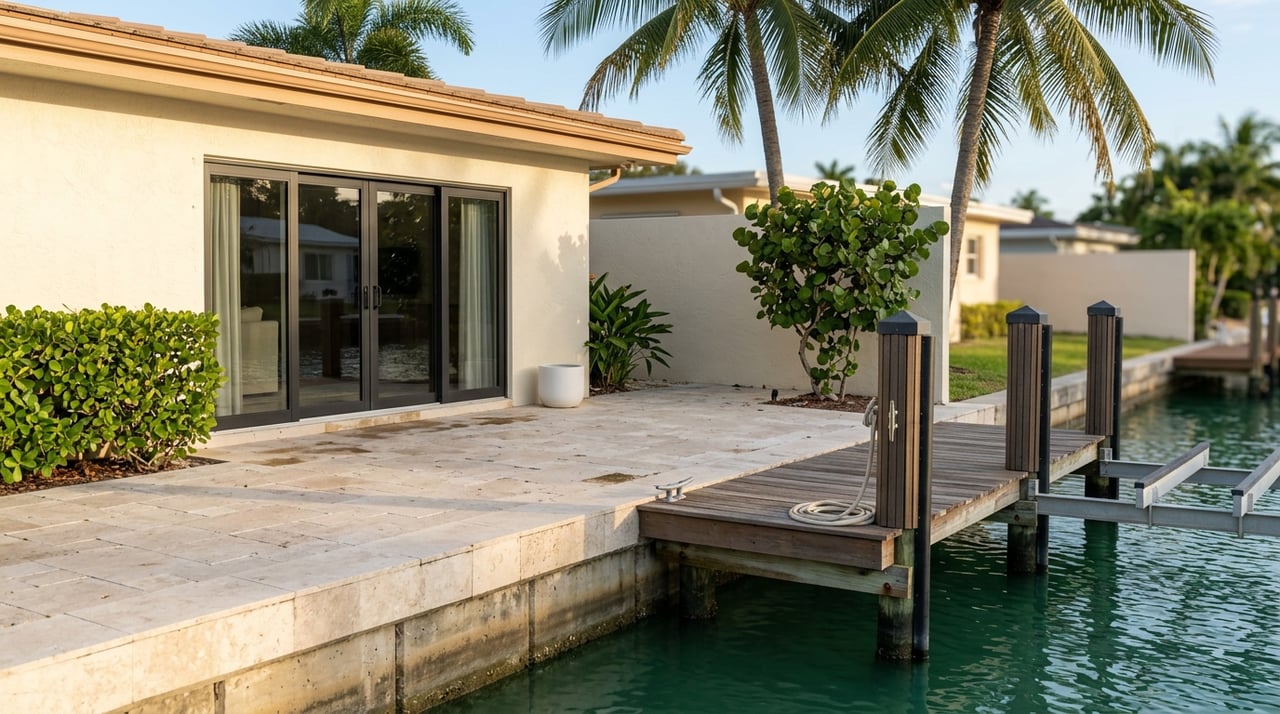
For many buyers, canal-front living is the classic Fort Lauderdale dream. You get a backyard water view, a chance for private dockage, and space for a boat, lift, or paddle craft depending on the property.
This setup often feels more personal and residential than larger open-water locations. You may enjoy a quieter setting while still having direct access to the city’s larger water network.
Dockage Is Not Automatic
One of the biggest misconceptions is that every canal-front home offers the same boating utility. In reality, having water behind the home does not automatically mean unrestricted dock use or easy upgrades.
Broward County regulates docks, seawalls, bulkheads, piers, boat lifts, and dredging around surface waters. The City of Fort Lauderdale also uses a specific permit category for boatlift, dock, seawall, and pile work. If you are shopping for a canal-front home, it is smart to look beyond the view and ask what is already permitted and what may need review later.
Intracoastal and Riverfront Living
If you want bigger views and a stronger boating atmosphere, Intracoastal and New River properties often stand out. These homes and condos can offer a more active waterfront setting, with easier access to marinas, public dockage, waterfront dining, and the energy that comes with a busy boating corridor.
The tradeoff is that this type of waterfront can feel less tucked away than a smaller canal setting. Some buyers love that vibrant feel, while others prefer a calmer backyard-waterfront experience.
Expect More Boating Activity
The city describes the Intracoastal as lined with marinas, waterfront restaurants, and nightspots. That tells you a lot about the lifestyle. You are not just buying a water view. You are buying into a corridor that is active, social, and highly used.
Fort Lauderdale also approved a slow-speed, minimum-wake zone between the Oakland Park Boulevard Bridge and Sunrise Boulevard Bridge to improve safety in one of the area’s busiest boating stretches. For boaters and non-boaters alike, that is a reminder that movement, wake, and traffic are part of the living experience.
Beach-Adjacent Living Near the Ocean
Not every waterfront buyer wants a boat behind the house. In Fort Lauderdale, near-ocean living is often about quick beach access, ocean views, and being close to public waterfront spaces rather than private dockage.
For many people, that is the ideal fit. You get the coastal lifestyle, the walkability to the sand, and the visual appeal of living near the ocean without needing to manage a seawall or a boat lift.
Beach Lifestyle Has Its Own Appeal
The city’s beach system includes Fort Lauderdale Beach, Fort Lauderdale Beach Park, Las Olas Oceanside Park, and other public waterfront spaces. That means some buyers focus less on boating access and more on daily access to the shoreline and outdoor recreation.
If your version of waterfront means morning walks by the ocean and evenings near the beach, this category may suit you better than a canal or river property. It is a different kind of waterfront, but still very much part of Fort Lauderdale living.
What Daily Ownership Really Involves
Waterfront homes in Fort Lauderdale come with a different ownership experience than inland homes. The water is not just part of the view. It affects insurance conversations, maintenance planning, permitting, and even how you use the property day to day.
That does not mean waterfront ownership is a bad idea. It simply means you should go in with a clear picture of what comes with it.
Flood Exposure Matters Early
The city says many residents live in or near Special Flood Hazard Areas. It also notes that floodplain rules require permits for work in the floodplain, and that standard homeowner policies usually do not cover flood damage.
That is why flood insurance should come up early in your search, not after you fall in love with a property. It is part of understanding the true cost and comfort level of waterfront ownership in Fort Lauderdale.
Seawalls Need Attention
Seawalls are not a background detail. They are a major part of many waterfront properties, and their condition can affect both your budget and your future plans.
Fort Lauderdale’s revised tidal barrier ordinance says a property owner may be required to raise a seawall when building a new one, when an existing seawall is in significant disrepair, or when tidal flow is breaching the seawall and affecting nearby property or right-of-way. The city also offers a Living Seawall Permit Fee Assistance Program with a 100 percent discount on base seawall building permit fees for qualifying habitat-enhancing projects.
Permits Are Part of the Process
If you plan to improve the water side of a property, permitting is part of the reality. Broward County’s Water and Wetlands Program regulates docks and seawalls, and some work may qualify for a streamlined general license while larger projects or dredging may require more review.
Fort Lauderdale’s permitting portal is digital and specifically groups boatlift, dock, seawall, and pile work under structural permits. For buyers, this is a reminder that future upgrades should be evaluated as part of the purchase decision, not as an afterthought.
Tides, Wake, and Bridge Clearance
Waterfront living here also means paying attention to things that inland buyers may never think about. Tides, wake, and bridge clearance can affect both convenience and safety.
The city says Fort Lauderdale is highly vulnerable to king tides and sea-level rise. It also reminds boaters that higher tides lower clearance under fixed bridges, which is a practical issue in a county with 89 fixed bridges.
Boating Utility Depends on More Than Location
A home may look perfect on a map, but boating use depends on more than whether it touches water. Bridge clearance, tidal conditions, and the type of water access all shape what is practical for your boat and your routine.
That is why many buyers benefit from narrowing their search by boat size, dock goals, and how they plan to use the water. A great waterfront match is not just scenic. It works for your actual lifestyle.
Water Quality Is Part of the Experience
Fort Lauderdale treats water quality as an active issue, not just a scenic backdrop. The city funds weekly sampling through Miami Waterkeeper at locations including Himmarshee Canal, Lauderdale Isles Landing, the Central Intracoastal, Middle River, and Tarpon River.
For buyers, that is useful context. It shows that water conditions can vary by location and that the specific frontage type you choose can shape your day-to-day experience on the water.
How Budget Shapes Waterfront Options
In Fort Lauderdale, your budget often changes what waterfront really looks like. Lower budgets may point you toward condos or older canal-adjacent properties with limited boating utility. Mid-range budgets may open the door to older single-family canal or riverfront homes with some dock potential.
Higher budgets typically offer the most usable boating access, such as better dockage, fewer bridge constraints, or more premium Intracoastal and beach-adjacent locations. The key takeaway is not the exact price point. It is that waterfront value is tied to usability, not just proximity to water.
How to Define Your Waterfront Search
The smartest way to search in Fort Lauderdale is to get specific fast. If you only search for “waterfront,” you may end up comparing very different property types that do not fit your goals.
Instead, try to narrow your search around the lifestyle you actually want. That helps you focus on the right homes and ask better questions from the start.
Questions to Ask Yourself
- Do you want canal-front, riverfront, Intracoastal, or beach-adjacent living?
- Do you need private dockage, or do you mainly want water views?
- What boat size, if any, do you need the property to support?
- How comfortable are you with flood-zone considerations?
- What is the condition of the seawall and other water-side structures?
- Do you want a quieter residential feel or a more active boating environment?
When you answer those questions early, your search becomes much clearer. You stop chasing the idea of waterfront and start identifying the version of waterfront that fits your life.
If you are weighing Fort Lauderdale waterfront options and want clear, practical guidance, Michelle Nelson can help you narrow the search, understand the tradeoffs, and move forward with confidence.
FAQs
What does waterfront living mean in Fort Lauderdale?
- In Fort Lauderdale, waterfront can mean canal-front, riverfront, Intracoastal-facing, or beach-adjacent living rather than one single property type.
What should buyers know about canal-front homes in Fort Lauderdale?
- Canal-front homes may offer private dockage and backyard water access, but docks, seawalls, boat lifts, and related improvements are regulated and may require permits.
What is different about Intracoastal living in Fort Lauderdale?
- Intracoastal living often offers bigger views, more boating activity, and stronger access to marinas, dining, and public dockage than smaller canal locations.
What should buyers know about flood risk for Fort Lauderdale waterfront homes?
- The city says many residents live in or near Special Flood Hazard Areas, and flood insurance is typically separate from standard homeowner coverage.
Why does seawall condition matter for Fort Lauderdale waterfront property?
- Seawall condition matters because owners may be required to raise or repair a seawall in certain situations, especially if it is in significant disrepair or tidal flow is breaching it.
How do tides and bridges affect boating from Fort Lauderdale homes?
- Higher tides can reduce clearance under fixed bridges, so bridge clearance and tidal conditions can directly affect boating access and daily use.
Is beach-adjacent living the same as boat-friendly waterfront in Fort Lauderdale?
- No. Beach-adjacent living is often more about ocean access, views, and walkability to the sand than private dockage or direct boating utility.