If you picture Miami as either fully walkable or completely car-dependent, the truth sits somewhere in the middle. Your day-to-day experience can look very different depending on where you live, how close you are to transit, and whether daily errands are clustered nearby. If you are thinking about a move and want a lifestyle with less driving, this guide will show you what walkable living in Miami really looks like and where it tends to work best. Let’s dive in.
Walkable Miami Starts With Location
In Miami, walkability is usually strongest in specific districts instead of across the whole metro. The City of Miami’s planning approach emphasizes pedestrian-friendly design, mixed use, compact building patterns, and environmental sensibility, while Miami-Dade’s Transit Oriented Communities program focuses homes, jobs, and services near premium transit.
That matters because a walkable lifestyle here often depends on living in the right pocket. In many parts of the metro, you may still need a car for some trips. But in select neighborhoods and station areas, you can handle a surprising amount of daily life on foot or with transit.
What Makes Low-Car Living Possible
Miami’s more walkable areas usually share one thing: transportation options are layered together. Instead of relying on one system alone, you often see rail, buses, trolleys, and pedestrian-friendly corridors working side by side.
Here are the main building blocks that support walkable living in Miami:
Metrorail Connects Key Corridors
Metrorail serves as Miami-Dade’s rail spine. According to Miami-Dade, it serves areas including Kendall, South Miami, Coral Gables, downtown Miami, the Civic Center area, Brownsville, Liberty City, Hialeah, and Medley, with connections to Brightline and Tri-Rail.
If you want to reduce driving, living near a Metrorail station can make a big difference. Station access often means easier commuting and better access to nearby shops, dining, and services.
Metromover Strengthens The Urban Core
Metromover is a free elevated people mover that operates seven days a week in downtown Miami, Omni, and Brickell. That makes those districts the clearest example of a rail-linked, car-light core in the city.
For many residents, that free circulation system changes the feel of everyday life. You can move around central districts more easily without constantly getting back in the car.
Buses And Trolleys Fill The Gaps
Metrobus works as the countywide connector and serves major shopping, entertainment, cultural, medical, and school destinations across a wide area. On top of that, the City of Miami trolley is free and accessible to all, with routes serving Brickell, Coconut Grove, Coral Way, Health District, Little Havana, Overtown, Wynwood, and other neighborhood corridors.
That extra layer matters because walkable living is not only about sidewalks. It is also about having practical options when a destination is a little too far to walk comfortably.
Miami Beach Adds Another Layer
Miami Beach has one of the strongest low-car setups in the area. The city highlights its free trolley network, live tracking, Freebee on-demand transit, bike options, pedestrian resources, and the Beachwalk for jogging, biking, and strolling.
Its complimentary trolley system connects South Beach, Mid Beach, and North Beach. The South Beach route also links many everyday destinations, including grocery stores, pharmacies, parks, museums, libraries, and civic and cultural venues.
The Underline Expands Walk And Bike Access
The Underline is a major mobility project beneath the Metrorail guideway. Its Brickell Backyard phase includes walking and biking paths, an outdoor gym, gardens, and gathering spaces, while the broader corridor is designed to connect stations and neighborhoods along the rail line.
For buyers who value movement, access, and outdoor space, that kind of infrastructure can make certain areas feel much more connected.
Where Walkability Shows Up In Miami
The most accurate way to think about walkability in Miami is by district. Some neighborhoods support a car-light lifestyle much better than others.
Downtown Miami, Brickell, And Omni
Downtown Miami, Brickell, and Omni are some of the clearest examples of walkable living in the city. These areas combine Metromover, Metrorail, trolley access, and ongoing street-level improvements that make it easier to move around without a car.
The East Flagler Street project added expanded sidewalks, outdoor dining space, better lighting, signage, and public art. The Underline’s Brickell phase also adds a pedestrian and bike corridor between the Miami River and SW 13th Street, which strengthens mobility in the area.
If your goal is to be close to transit, dining, work hubs, and daily conveniences, this core tends to offer one of the most complete low-car setups in Miami.
Coconut Grove And The South Corridor
Coconut Grove shows how walkability in Miami often works best around transit stations and mixed-use areas. Miami-Dade’s Transit Oriented Development program highlights Grove Central, next to Coconut Grove Metrorail Station, as a mixed-use residential and retail project with 402 residential units and 172,000 square feet of retail.
The county also notes that the historic Coconut Grove core is within walking distance. For you, that means this area can offer a practical mix of housing, transit access, errands, and restaurants within a more connected daily routine.
Miami Beach
Miami Beach stands out as one of the metro’s strongest low-car environments. Walking is reinforced by a dense mix of destinations, citywide trolley service, and the Beachwalk, which supports biking, jogging, and strolling along the island.
This setup can make everyday life feel simpler. If you want a neighborhood where recreation, errands, and dining are often closer together, Miami Beach offers one of the clearest examples.
Wynwood, Overtown, Little Havana, And Health District
Several other Miami districts function as walkable or near-walkable nodes because destinations cluster around transit and local corridors. Trolley routes connect Wynwood to shopping, parks, and schools, Overtown to education, medical, and transit hubs, Little Havana to cultural hubs and schools as well as Brickell, and the Health District to hospitals, the medical campus, and Civic Center station.
These areas may not all deliver the same kind of walkable experience, but they show how Miami often works in pockets. If your routine centers on a specific corridor, transit stop, or district hub, you may be able to drive much less than you expect.
Coral Gables And Downtown Coral Gables
Nearby Coral Gables also supports a pedestrian lifestyle in its downtown core. The city says its central business district is intended to promote pedestrian activity through mixed use, and Giralda Plaza is a pedestrian walkway lined with restaurants, bars, and coffee shops.
That creates a more traditional walk-around district feel. If you enjoy being able to step out for coffee, dining, or errands, downtown Coral Gables is worth understanding as part of the broader Miami area conversation.
Kendall And Dadeland South
Kendall is not uniformly walkable, but the area near Dadeland South stands out as a more car-light pocket. Metrorail serves Kendall on its south end, and The Underline’s planned southern segment connects toward Dadeland South.
This is a good reminder that even in more car-oriented sections of the metro, station-area living can shift your daily routine. Proximity to fixed rail and nearby services often matters more than the broader ZIP code.
What A Walkable Home Usually Looks Like
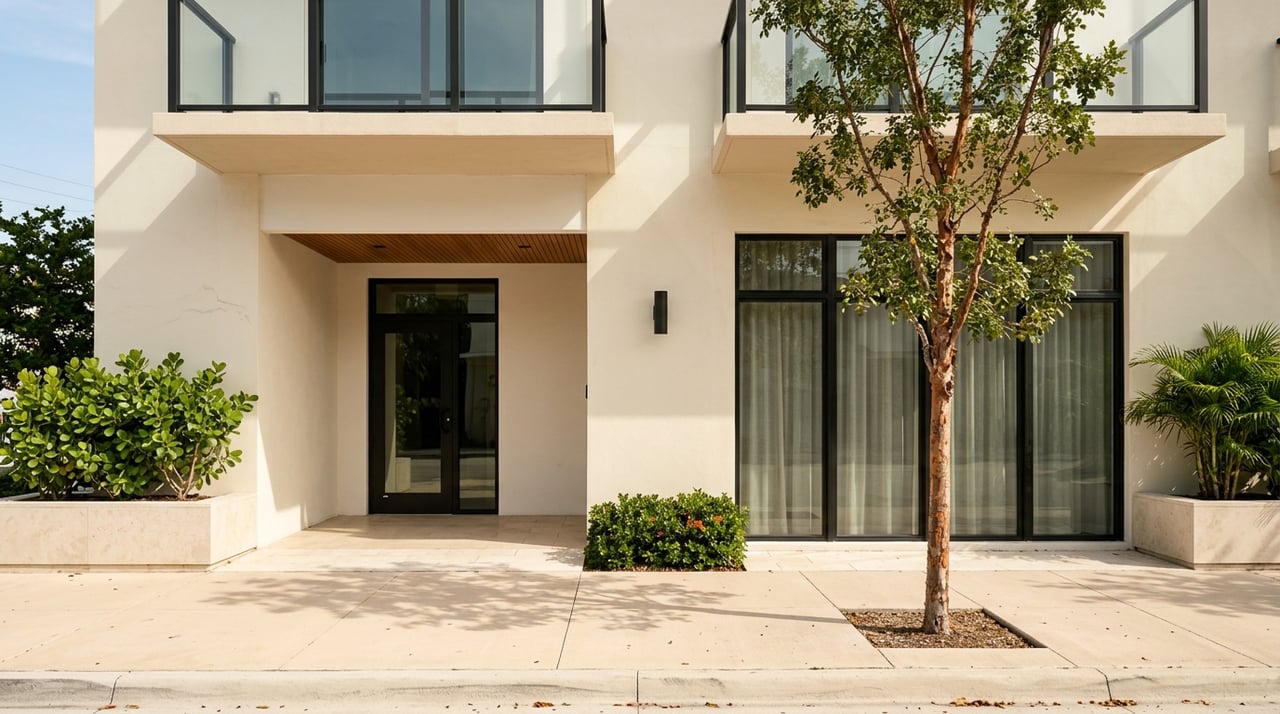
In Miami, walkable housing is often different from what buyers picture in more suburban parts of South Florida. It is commonly tied to condos, mixed-use apartments, transit-village-style projects, and residential buildings with ground-floor retail.
Miami-Dade’s Transit Oriented Development examples, including 7th Avenue Transit Village in Liberty City and Grove Central in Coconut Grove, show that pattern clearly. The most practical takeaway is simple: if you want a walkable lifestyle, focus on homes close to rail stations, trolley stops, or mixed-use streets where groceries, dining, parks, hospitals, and other everyday destinations are already part of the landscape.
How To Shop For Walkability In Miami
If walkability is high on your list, it helps to define what that means for your routine before you start touring homes. One buyer may mean a short walk to transit, while another may care more about coffee shops, parks, grocery options, or a daily commute without heavy driving.
As you compare areas, keep these questions in mind:
- How close is the home to Metrorail, Metromover, trolley, or bus service?
- Can you reach everyday errands without a long drive?
- Are destinations clustered along a mixed-use street or district core?
- Does the area offer safe, comfortable walking routes and pedestrian infrastructure?
- Will your work, school, or lifestyle needs still require frequent car trips?
A walkable address in Miami is often about convenience in layers. The more nearby services and transit options you have, the easier it becomes to live with less driving.
The Real Takeaway On Miami Walkability
Walkable living in Miami is real, but it is not evenly spread across the metro. The strongest examples tend to be Downtown Miami, Brickell, Omni, Miami Beach, Coconut Grove, parts of Kendall near Dadeland South, and service-rich districts like Wynwood, Overtown, Little Havana, the Health District, and downtown Coral Gables.
That is why a neighborhood-level view matters so much when you are house hunting. If you want a home that supports a more connected, less car-dependent lifestyle, the right block or station area can matter just as much as the city name on the listing.
If you are comparing South Florida neighborhoods and want help finding the right balance of location, lifestyle, and value, Michelle Nelson can guide you through your options with clear, local insight.
FAQs
What does walkable living in Miami usually mean?
- In Miami, walkable living usually means living in a district or station area where transit, shops, dining, parks, and services are clustered close together rather than expecting the entire metro to feel walkable.
Which Miami areas are most walkable for daily life?
- Some of the strongest examples include Downtown Miami, Brickell, Omni, Miami Beach, Coconut Grove, downtown Coral Gables, and select transit-linked pockets such as Dadeland South.
Is Miami Beach good for a low-car lifestyle?
- Yes. Miami Beach stands out because it combines a free trolley system, on-demand transit, bike options, pedestrian resources, the Beachwalk, and a dense mix of everyday destinations.
Can you live in Kendall with less driving?
- In some parts, yes. Kendall is not uniformly walkable, but areas near Dadeland South and the southern Metrorail corridor can support a more car-light routine.
What type of home supports walkability in Miami?
- In Miami, walkable homes are often condos, mixed-use apartments, transit-oriented projects, or residences near commercial streets and transit stops rather than homes in more isolated, car-dependent locations.