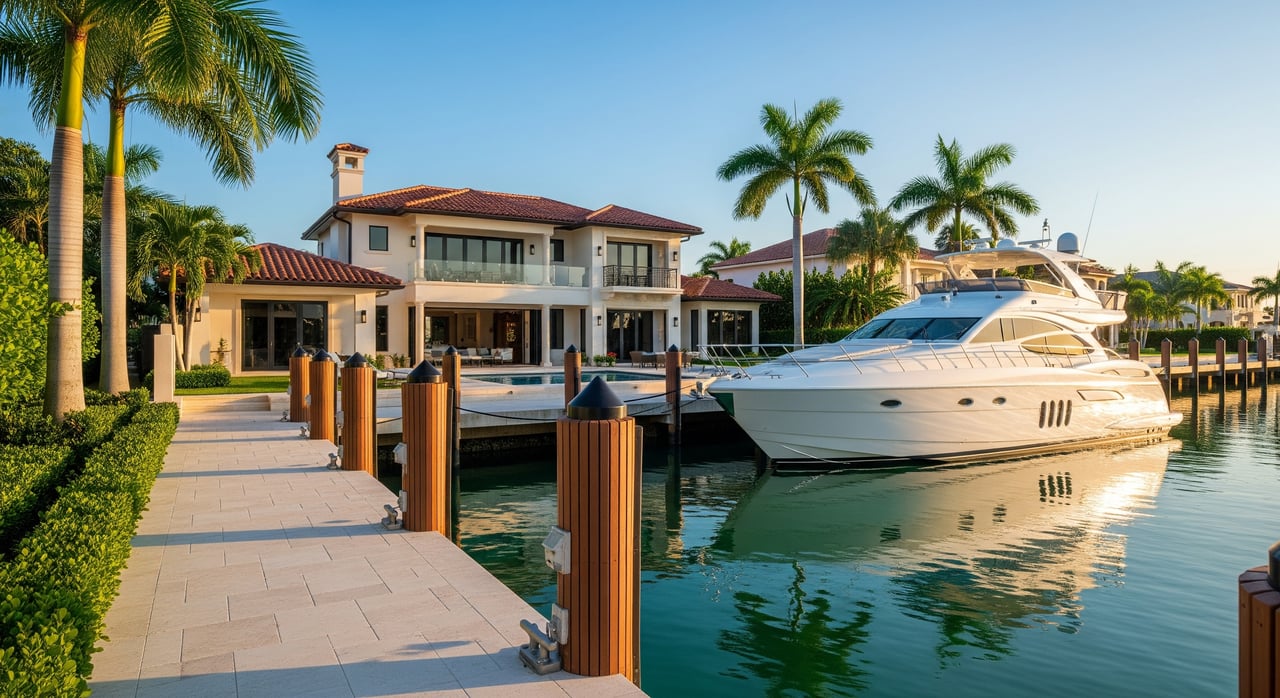
Dreaming of stepping from your backyard to your boat in Boca Raton? You’re not alone. Whether you picture weekends cruising the Intracoastal or quick runs offshore, the right property and dock access make all the difference. In this guide, you’ll learn how marinas, HOAs, permits, and local rules work in Boca Raton so you can buy or sell with confidence. Let’s dive in.
Navigating Boca’s waterways
Boca Raton sits on the Atlantic Intracoastal Waterway, which connects you north to West Palm Beach and south to Delray Beach and beyond. Ocean access is available through the Boca Raton inlet, which adds considerations like tide, swell, and inlet navigation. Slip supply and anchorage options are limited in built-up areas, so planning ahead helps.
Charted depths and bridges
Your vessel’s length, beam, and draft matter. Before you commit to a property or marina, review charted depths, channel alignment, and bridge clearances using the NOAA nautical charts for the ICW. Keep in mind that local conditions and maintenance windows can affect dredged channels.
Ocean access basics
If offshore fishing or cruising is your goal, evaluate proximity to the inlet and how your boat handles ocean conditions. Some buyers prefer lifts or highly protected slips for storm readiness and ease of maintenance.
Ways to keep your boat
You have four common access options in Boca Raton and greater Palm Beach County. Each one carries different rules, costs, and availability.
Private residential docks
Single-family waterfront lots often allow a private dock or lift, subject to riparian rights, HOA rules, and permits. Some docks sit over sovereign submerged lands, which may require state authorization. If the property already has a dock, verify permits and as-built plans during due diligence.
Community or association docks
Townhome and condo communities may offer shared slips or a community marina. Access is controlled by association documents. Expect policies about assignment, waitlists, and guest slips, and confirm whether slips transfer with the unit or require separate approval.
Commercial marinas
Marinas offer slips for lease or transient dockage. Evaluate slip length and beam, shore power, freshwater, security, fuel and pump-out services, and hurricane procedures. Availability can be tight in peak season. Waiting lists and rates vary, so contact marinas directly or use directories like Dockwa or ActiveCaptain for research.
Public launch ramps
If you trailer a smaller boat or plan to use kayaks or paddleboards, public ramps can work well. They are cost-effective, but they are not a replacement for a private slip if you want daily convenience.
HOA and condo rules that matter
Association rules govern many parts of boat life. Florida law structures how condos and HOAs operate, and each community’s recorded documents apply on top of that.
- Parking and storage rules for boats and trailers
- Size, type, and location limits for lifts, davits, and docks
- Liveaboard restrictions at association docks
- Leasing or transferring slips within the community
- Guest policies, security, and insurance requirements
You can review the legal framework in Florida Statutes Chapter 718 for condominiums and Chapter 720 for HOAs. Always read the recorded CC&Rs and bylaws for a specific property because community rules vary widely.
Permits and approvals for docks and lifts
Building, repairing, or enlarging a dock often requires multiple approvals. HOA approval does not replace government permits, and government permits do not override HOA rules. Plan for both.
Who regulates what
- City and county permits: The City of Boca Raton and Palm Beach County regulate seawalls, docks, lifts, and shoreline work. Start with the City of Boca Raton Building Division and the county’s Planning, Zoning and Building Department.
- State authorizations: Work over sovereign submerged lands or seaward of the mean high water line may require state authorization through coastal and submerged lands programs.
- Federal permits: Structures or dredging in navigable waters often require a U.S. Army Corps of Engineers permit. See the USACE Jacksonville District Regulatory page to understand Section 10 and Section 404 requirements.
A simple permitting path
- Confirm deeded riparian rights and any existing dock licenses or easements.
- Review HOA or condo CC&Rs and seek written association approval if required.
- Hire a licensed marine contractor or engineer to design the dock and complete any needed environmental surveys.
- Apply for city and county building permits, plus any state submerged lands authorization.
- If federal review is needed, submit your USACE application and coordinate any mitigation.
- Build according to approved plans and comply with all permit conditions.
Permitting timelines vary with scope and environmental review. Simple repairs may be quick, while new docks or major extensions can take months.
Environment, safety, insurance, and storms
Boca Raton’s waterways are home to protected wildlife and sensitive habitats. Boaters must follow speed zones, protect seagrass, and comply with safety and sewage rules.
- Manatee zones and speed limits: Review local slow-speed and no-wake areas through the Florida Fish and Wildlife Conservation Commission’s manatee protection guidance.
- Safety equipment: The U.S. Coast Guard boating regulations explain required gear and operating rules.
- Pump-outs and sewage: Choose marinas with reliable pump-outs to stay compliant and protect water quality.
- Hurricane planning: Ask your marina or HOA about pre-storm plans. Options include haul-out, relocating to a protected harbor, or securing the vessel on a lift or approved mooring.
- Flood and insurance: Flood insurance is separate from homeowners insurance and may be required in certain zones. Check a property’s flood risk at the FEMA Flood Map Service Center. Boat owners should also carry appropriate hull and liability coverage, and many marinas require proof of insurance.
Buyer and seller due diligence checklist
Use this list to save time and avoid surprises during escrow.
Documents to request
- Deed and survey showing riparian boundaries and mean high water line
- HOA or condo CC&Rs, bylaws, and any marina or dock rules
- Past permits, final inspections, and as-built drawings for docks, lifts, and seawalls
- Proof of any state submerged lands lease or license if the dock extends over sovereign lands
- Recent seawall inspection reports and records of repairs or assessments
Property and infrastructure inspections
- Marine contractor or dock inspector for pilings, stringers, decking, lifts, and electrical
- Seawall evaluation by a qualified contractor or engineer
- Marine surveyor for any included vessel and mooring equipment
Questions to ask sellers and associations
- Is the dock, lift, or slip included in the sale and fully permitted?
- Are there easements, licenses, or HOA rules that limit transfer or use of the slip?
- What are the community’s policies on boat size, guest slips, and liveaboards?
- Are there outstanding violations or required repairs for the dock or seawall?
- Does the marina or HOA have a written hurricane plan, and what are owner responsibilities?
- Are there waitlists or separate fees for slip assignment or use?
Negotiation tips
- Consider contingencies for verifying riparian rights, dock permits, and seawall condition.
- If you plan upgrades, allow time for permits and environmental review in your closing timeline.
Pricing, timelines, and availability
Slip supply in desirable areas can be limited. Waiting lists and rates vary by marina and association, and larger slips with higher amperage shore power often command premiums. Design, permits, and construction lead times depend on project scope and environmental factors.
As a buyer, build room in your budget for ongoing dock and seawall maintenance, lift servicing, and insurance. As a seller, collecting permits, inspection reports, and HOA documents upfront can streamline your sale and build buyer confidence.
How to evaluate marinas
When comparing marinas, focus on the essentials:
- Slip dimensions that fit your length and beam
- Shore power capacity, freshwater, and security
- Fuel, pump-outs, and on-site maintenance or haul-out options
- Hurricane plan, insurance requirements, and storm surge history
- Guest policies for visiting friends and family
- Current waitlist process, fees, and transfer rules
If you own a larger vessel, remember that full-service yacht yards and refit facilities are more common in nearby West Palm Beach and Fort Lauderdale. Many owners use regional yards for haul-outs or major work.
Ready to buy or sell with a boat in mind?
You do not need to navigate this alone. If you want a home that truly fits your boating lifestyle, a local plan and a clear checklist will save you time and money. When you are ready, reach out to Michelle Nelson for a tailored search, document review support, and a smooth closing experience. Schedule Your Free Consultation.
FAQs
What should first-time Boca buyers know about boats?
- Start with your vessel’s size and draft, then confirm bridge clearances, channel depths, and slip availability using NOAA charts and local marina policies.
Do HOA rules replace city or state dock permits?
- No. You typically need both HOA approval and government permits. Associations can be more restrictive but cannot waive state or federal requirements.
Can I live aboard at a residential dock in Boca Raton?
- Often not. Many HOAs and communities restrict liveaboards, and marinas may have limits. Check association documents and marina policies before you buy.
How do I check flood risk for a waterfront home?
- Look up the address on the FEMA Flood Map Service Center and review any lender insurance requirements for the mapped zone.
What permits are needed to build or extend a dock?
- Expect city or county building permits, possible state authorization for submerged lands, and in some cases a U.S. Army Corps of Engineers regulatory permit.
Where can I find manatee speed zones and boating rules?
- Review the FWC’s manatee protection zones and the U.S. Coast Guard boating regulations for required equipment and operating rules.