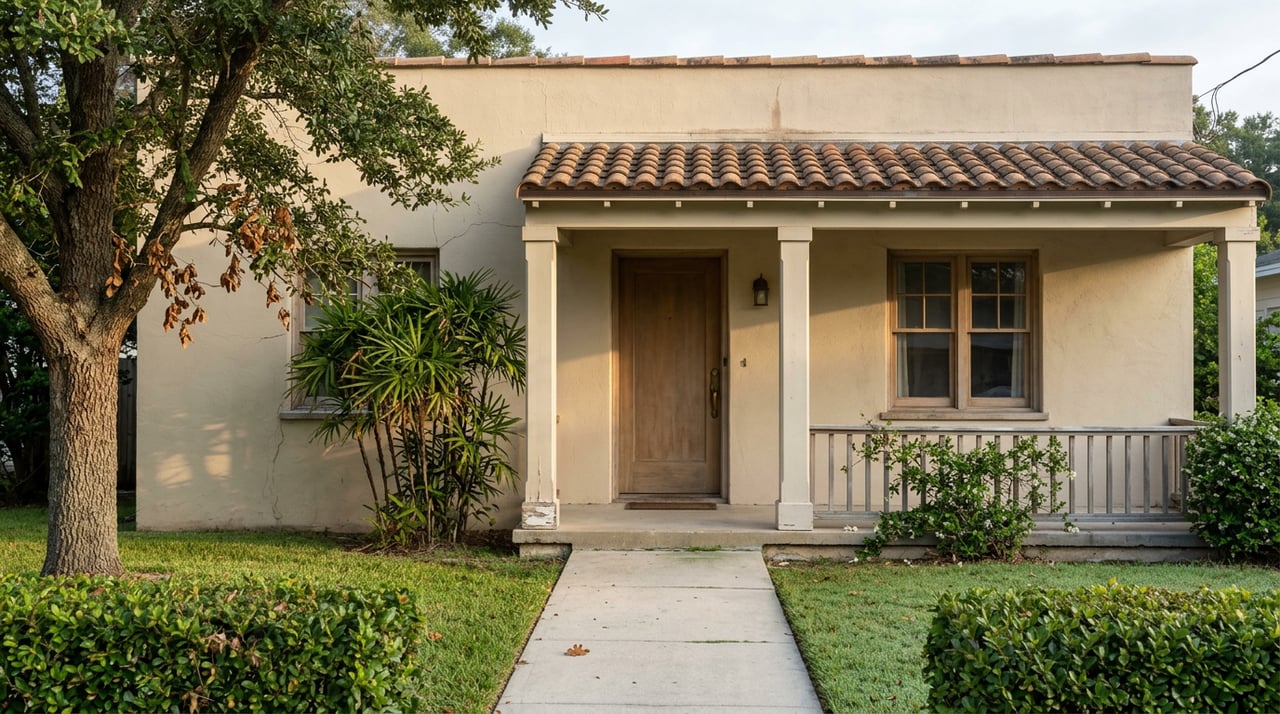
Two homes inside West Palm Beach's Northwood historic districts can sit under the exact same set of preservation rules and close four figures apart. As of March 2026, Redfin listed Old Northwood Historic District at a median of about $1.2 million, while Northwood Hills Historic District, which carries the identical historic designation, was closing at a median around $325,000. Northwood Gardens sat near $625,000 in the same window.
That gap is not a mystery of taste. It is a mechanism worth understanding before you write an offer, because both districts answer to the same Historic Preservation Board, both require the same Certificate of Appropriateness for exterior work, and both qualify for the same city tax break on a renovation. If the regulatory package is identical, the regulatory package is not what's pricing these homes four times apart. Something else is, and it changes what a value-conscious buyer should actually be shopping for in this part of West Palm Beach.
The Rules Are the Same. The Money Isn't.
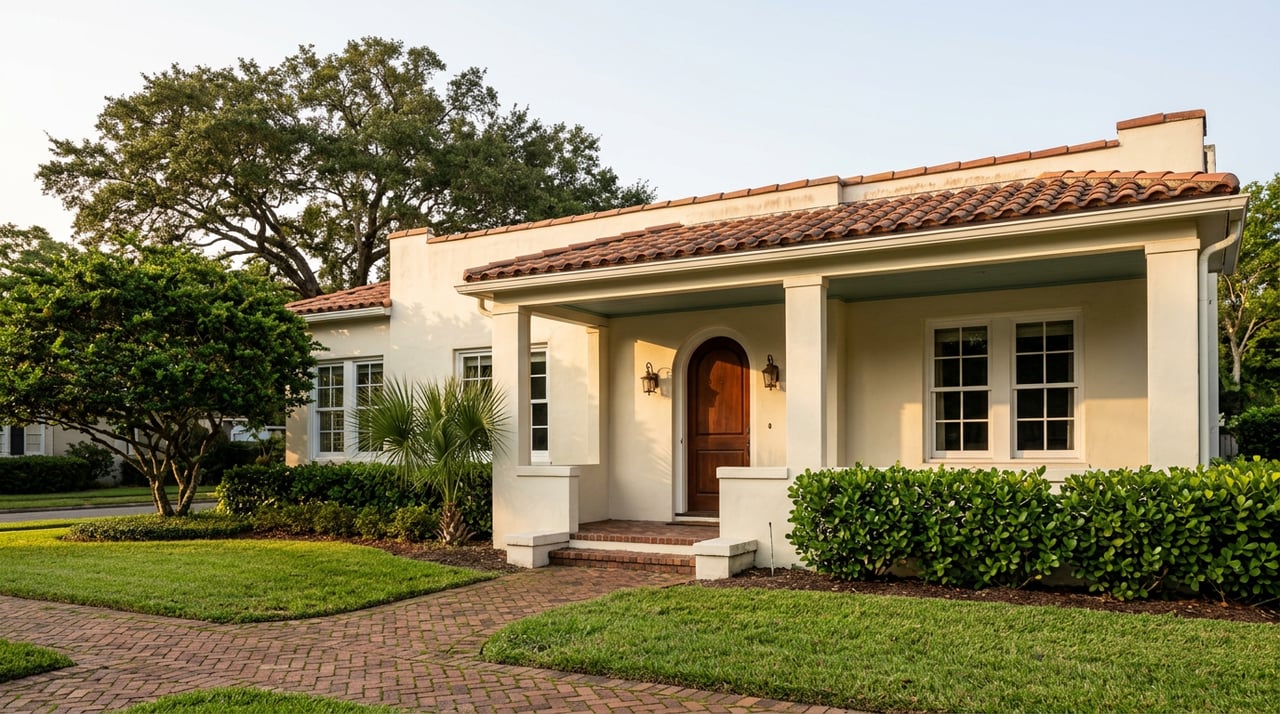
Old Northwood became the city's first designated local historic district in 1991 and was added to the National Register in 1994, following what the neighborhood association describes as a renaissance that took hold starting in 1987. The district holds 173 contributing structures built between 1921 and 1929, mostly Frame Vernacular, Mission-style, and Mediterranean homes.
Northwood Hills Historic District carries its own local designation, subject to the same exterior review process. Yet the March 2026 price gap between the two runs close to $900,000. If designation alone explained premium pricing, that gap should not exist. What actually separates them is proximity: distance to Flagler Drive and the Intracoastal, distance to Northwood Village's commercial core, lot size, and how much of each district's original architecture survives intact versus how much has been altered or replaced over time. The city classifies every historic property as either contributing or noncontributing, meaning even two houses on the same block can carry different weight in a preservation review, and that granular status matters more to your renovation timeline than the neighborhood name on the listing.
| District | Reported Median (March 2026) | Carries "Historic District" Name | Era |
|---|---|---|---|
| Old Northwood Historic District | ~$1.2 million | Yes | 1921 to 1929 core |
| Northwood Gardens | ~$625,000 | Not in source data | Mixed |
| Northwood Legacy | ~$350,000 | Not in source data | Mixed |
| Northwood Hills Historic District | ~$325,000 | Yes | Mixed |
The takeaway for a buyer working with a $325,000 to $650,000 budget: you can land inside a locally designated historic district, with everything that designation protects and everything it requires, without paying Old Northwood's price. Confirm current pricing against live MLS data before you tour, since neighborhood medians here shift quickly with small sample sizes.
What the Designation Actually Requires
The City of West Palm Beach's Historic Preservation Program oversees 18 locally designated historic districts and 46 individually designated sites through design review. Any exterior change that alters how the property looks from the street, a new roof, replacement windows, siding, an addition, a driveway, a fence, needs a Certificate of Appropriateness before it can proceed to a standard building permit.
Not every project goes to a public hearing. Routine maintenance and small-scale changes, especially on parts of a house not visible from the street, typically clear through staff-level review. Additions, major alterations, or anything touching the front facade go to the full Historic Preservation Board, which meets monthly. The distinction matters for scheduling: a straightforward staff review can move in weeks, while a project requiring board approval, revisions, and resubmittals can stretch that timeline considerably longer.
A few practical rules show up across the district's guidelines. Additions generally get placed at the side or rear of the house, not the front. Vinyl fencing is not permitted. Original windows, doors, and trim are expected to be repaired rather than replaced where possible, though impact-rated replacements that match the original profile are typically workable. If your planned renovation exceeds half the home's assessed value, federal flood rules require the entire structure to meet current flood-compliance standards, which is worth pricing into your offer on any older Northwood home before you assume a light cosmetic refresh will do.
Here is a rough sequence buyers should expect once they're under contract on a contributing structure:
- Confirm with the city's Historic Preservation Office whether the specific address is contributing or noncontributing within its district.
- Schedule a pre-application conversation with preservation staff before finalizing renovation plans.
- Document existing conditions with photos and measurements.
- Submit the Certificate of Appropriateness application, budgeting weeks for staff-level items and months for anything the board must hear.
- Apply for standard building permits only after the COA is approved, since the building department will ask for proof of that approval as part of the permit package.
The Tax Break Most Offers Don't Account For
The friction above is real, but it comes paired with a financial tool most buyers never ask about until they're deep into a renovation budget. West Palm Beach's historic preservation tax exemption ordinance allows an approved rehabilitation to exempt the increase in assessed value, the part created by your improvements, from city and county property taxes for up to ten years. You keep paying taxes on the pre-renovation value while the upgrade itself rides tax-free for a decade.
This exemption applies to owner-occupied single-family homes, not just income-producing property. That is a meaningful distinction, because the separate federal Historic Rehabilitation Tax Credit, worth 20 percent of qualified costs, is restricted to income-producing properties and does not apply to a primary residence. Buyers sometimes conflate the two and assume the historic designation offers no real financial upside if they plan to live in the house themselves. It does, just through the local program rather than the federal one, and it requires pre-approval before construction starts, not after.
For a buyer weighing a $325,000 Northwood Hills fixer against a move-in-ready home outside any historic district, the math should include this exemption on the renovation side, not just the COA delay on the timeline side. The trade is real in both directions.
Why the Discount Might Not Sit Still
Northwood Village, the commercial spine of the neighborhood along Northwood Road, was designed in the 1920s as West Palm Beach's second Main Street and became the focus of a Community Redevelopment Agency district covering roughly 459 acres. The village itself was added to the city's historic register in 2016 and has been building momentum since: a March 2026 Nights in Northwood Village event drew more than 50 vendors, and an eight-story mural, Color Field of Northwood, went up on The Spruce, a mixed-use building in the heart of the district, in 2025.
That momentum is about to get a much larger addition. The District at Northwood, a mixed-use project at 2501 Pinewood Avenue designed by architect Kobi Karp, is slated for completion in the fourth quarter of 2026. The project brings 382 apartments and more than 60,000 square feet of Class A restaurant and retail space, with Miami-based Elev8tion Fitness already signed to a 10-year lease as its first retail tenant. Whatever effect that much new density and commercial square footage has on the surrounding residential blocks, it will be measured against today's prices, not last year's. Buyers evaluating Northwood Hills or Northwood Gardens right now are shopping ahead of a specific, dated commercial delivery a short walk from the historic core.
A Few Questions Worth Settling Before You Offer
- Is the specific address contributing or noncontributing within its historic district, and does that change the scope of review your renovation plans will face?
- Has the seller or a prior owner already secured a Certificate of Appropriateness for any exterior work you're inheriting or planning to continue?
- What would your renovation cost as a percentage of the home's assessed value, and does that trigger the federal 50 percent flood-compliance threshold?
- Have you confirmed current pricing against live MLS comps rather than a listing description, since small sample sizes move these medians quickly?
FAQ
Does West Palm Beach's historic review regulate paint color? Generally, no. Exterior design review in these districts tends to focus on rooflines, windows, porches, additions, and other structural or material changes rather than paint selection.
What does it mean if my home is classified as noncontributing? The city sorts properties inside historic districts into contributing and noncontributing categories. A noncontributing structure has typically been altered from its original form or built after the district's period of significance, and that status can change which design guidelines apply to your project, so confirm classification with the city before finalizing a renovation scope.
Can I use the 10-year tax exemption if I plan to live in the house myself? Yes. The local ad valorem exemption applies to owner-occupied properties, unlike the separate federal 20 percent tax credit, which is limited to income-producing historic buildings.
If you're weighing a historic Northwood address against a newer build elsewhere in West Palm Beach, the numbers above are a starting point, not the whole conversation. Michelle Nelson works Palm Beach County's entry to mid-market homes daily and can walk you through what a specific address's contributing status, COA history, and tax exemption eligibility actually look like before you write an offer. Schedule Your Free Consultation to get the real picture on a property you're considering.