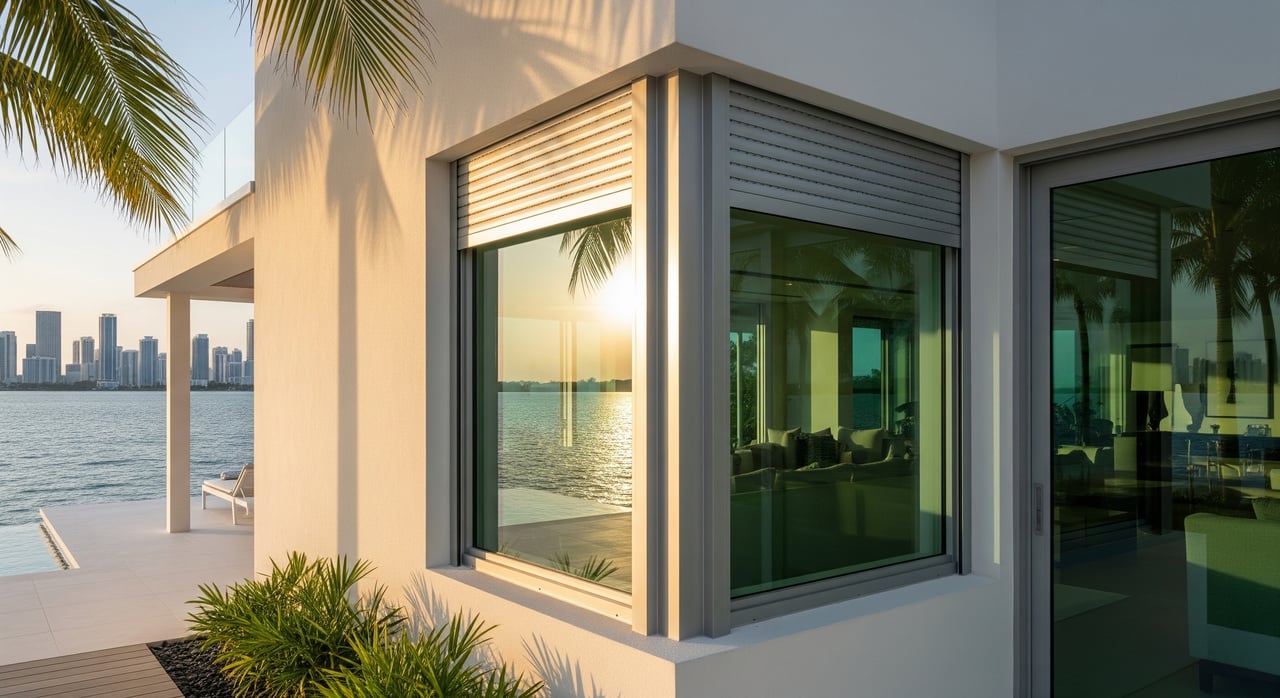
Hurricane season is a fact of life in Miami. When a storm watch pops up, you either race to put up panels or you rely on impact glass already in place. If you are weighing protection, cost, and potential insurance savings, choosing between impact windows and shutters is a big decision.
In this guide, you will learn how each option performs in Miami‑Dade’s High‑Velocity Hurricane Zone, what typical costs look like, how insurance credits work, and which documents you need to secure discounts. You will also get a clear checklist to move forward with confidence.
Let’s dive in.
What Miami‑Dade requires
Miami‑Dade County sits in Florida’s High‑Velocity Hurricane Zone, so products must meet strict standards to be considered compliant. The Florida Building Code recognizes tested and approved window and shutter systems for the HVHZ. Miami‑Dade’s Product Control program issues Notices of Acceptance that show a product met the required testing.
Approved products typically show testing to Miami‑Dade’s TAS 201, TAS 202, and TAS 203 standards or to ASTM E1886 and E1996. These certifications demonstrate resistance to windborne debris and the pressure cycles a hurricane can create.
Why approvals matter
Insurers and local building departments look for proof of compliance. Products with a Miami‑Dade NOA or Florida Product Approval are more likely to qualify for both code acceptance and potential insurance credits. Without the right approvals, you may not pass inspection or receive discounts.
Permits and installation
Permits are required for window replacements and permanent shutter installations in Miami‑Dade. Final inspections and proper installation are critical. Even an approved product may not qualify for credits if it lacks a permit, installation documentation, or a final inspection sign‑off.
Impact windows: protection and benefits
Impact windows use laminated glass and reinforced frames to resist debris and design pressures. Once installed, they provide continuous, always‑on protection without any action from you when a storm approaches.
Beyond storm performance, impact windows can reduce noise, block UV, improve thermal comfort, and add a sense of security. Many homeowners also prefer their clean look because there is no exterior hardware to store or deploy.
Pros
- Continuous protection with no deployment required
- Strong noise reduction and potential energy benefits
- Clean aesthetics that can enhance curb appeal
Cons
- Higher upfront cost per opening than basic shutters
- If damaged, you replace the window assembly
- Must verify the exact NOA and design pressure rating for your home’s openings
Typical costs in Miami
- Small to medium windows: about $500 to $1,500+ per window installed
- Large picture windows and sliding glass doors: about $1,500 to $6,000+ per opening
- Per square foot: roughly $40 to $75+ installed, depending on frame, glass options, and complexity
Expect permit fees and possible ancillary work such as framing, flashing, stucco, or trim repairs. Prices vary by product line and installer, so get multiple local bids.
Lifespan and maintenance
Many impact window systems last 20 to 40+ years. The laminated glass holds up well, but you should periodically check seals and hardware. Routine cleaning and inspection help maintain performance over time.
Hurricane shutters: types, costs, and upkeep
Shutters protect openings by covering them during a storm. Several types can meet Miami‑Dade or ASTM standards when properly designed and installed.
Common shutter options
- Removable aluminum or steel panels: stored when not in use and attached before a storm
- Accordion shutters: folding systems mounted at the opening for quick closure
- Roll‑down shutters: manual or motorized, offering fast deployment and additional shading or security
- Bahama or colonial shutters: hinged designs that serve as shade features and close for protection
Pros
- Lower upfront cost for basic panel systems
- Accordion and roll‑down shutters deploy quickly across the whole home
- Often easier to retrofit on existing windows without full replacement
Cons
- Panels require storage and manual installation before a storm
- Visible tracks and boxes can affect aesthetics
- Mechanical systems like roll‑downs need regular service
Typical costs in Miami
- Panels: about $100 to $700 per opening installed
- Accordion shutters: about $300 to $1,500 per opening installed
- Roll‑down shutters: about $1,000 to $4,000+ per opening installed
- Bahama or colonial shutters: about $500 to $3,000+ per opening
Metal shutters can last 10 to 30+ years with maintenance. Plan for periodic lubrication, hardware checks, and servicing of motors or tracks on roll‑downs.
Cost comparison: upfront vs long term
- Upfront cost: Panels are often the least expensive path to code‑compliant protection. Impact windows and motorized roll‑downs sit at the higher end per opening.
- Lifecycle costs: Shutters can incur maintenance and service costs, especially for mechanical systems. Impact windows may reduce noise and help with energy use over time.
- Convenience: Impact windows offer set‑and‑forget protection. Shutters require deployment, and panels require storage and time.
- Aesthetics: Impact glass maintains a clean exterior. Some shutter types are more visible, which can be a factor for curb appeal or association rules.
Insurance credits and how to qualify
Opening protection is a major item on Florida wind mitigation inspections. Insurers often award credits when all relevant openings are protected by approved products and the work is properly documented. The exact credit varies by insurer and by the overall mitigation profile of the home.
A licensed inspector will typically complete a wind mitigation inspection form that lists your opening protection type and ratings. Insurers may ask for the product NOA or Florida Product Approval, your permit and final inspection, and proof that every applicable opening is protected.
Documentation checklist
- Miami‑Dade NOA or Florida Product Approval for the exact product and model
- Building permit and final inspection sign‑off
- Manufacturer installation instructions and contractor certification of proper installation
- Wind mitigation inspection report from a licensed inspector
- Clear photographs of the products and labels
How much can you save?
Savings vary by insurer, policy, and the combination of mitigation features on your home. Impact windows and approved shutters can both qualify when all openings are protected and documentation is complete. Always confirm credit rules and required documents with your insurer before you purchase.
Permits, HOAs, and condos in Miami
Permits are required for window replacements and permanent shutter systems. Condos and HOAs often have specific product and color requirements, and many associations require board approval. In condos, coordinating access, work hours, and uniform exterior appearance is common.
If your home is older, you may need additional framing or flashing work when replacing windows. Build these possibilities into your budget when you compare quotes.
Financing your upgrade
Homeowners often use home equity loans or HELOCs, personal loans, or contractor financing to complete projects. Property Assessed Clean Energy programs are available in some parts of Florida and can finance hurricane retrofits where offered. Direct federal grants to individual homeowners are limited, though occasional local or state programs may appear. Check availability before you decide.
How to choose for your Miami home
- Risk tolerance and convenience: If you want always‑on protection, impact windows are hard to beat. If you are comfortable deploying shutters before a storm, shutters can be cost‑effective.
- Budget and timing: Panels and accordions often have the lowest upfront cost. Impact windows and roll‑downs provide more convenience and secondary benefits.
- Property type: Condos may limit exterior changes and require specific products. Single‑family homes usually have more flexibility.
- Insurance goals: Confirm with your insurer which products qualify and what documentation is required for credits.
- Resale and comfort: Impact windows are commonly seen as an amenity in Miami, with benefits like quieter interiors and UV reduction.
Quick homeowner checklist
- Define your goals: convenience, aesthetics, budget, insurance savings, noise reduction
- Inventory all openings, including sliding doors and garage doors
- Verify product approvals: ask for the Miami‑Dade NOA or Florida Product Approval number
- Confirm design pressure ratings match your specific openings
- Get at least three bids from licensed contractors that include permits and final inspections
- Check HOA or condo rules and secure approvals
- Ask your insurer which documents are needed for credits and whether removable panels qualify
- Plan financing if needed and verify any local program availability
- After installation, complete final inspections and schedule a wind mitigation inspection
- Submit all documents and photos to your insurer for potential credits
Thinking about how these choices affect buying or selling? Buyers value verified protection and lower hassle. Sellers who can provide NOAs, permits, and a recent wind mitigation report give buyers and insurers more confidence.
If you want help weighing the tradeoffs for a specific Miami property, connect with a local advisor who understands both the code and the market. Schedule Your Free Consultation with Michelle Nelson to discuss how impact windows or shutters can influence your home search, your sale, and your insurance costs.
FAQs
Will my Miami insurer discount my premium if I install impact windows?
- Often yes if the windows are approved, permitted, and documented on a wind mitigation inspection. The amount varies by insurer and your home’s overall mitigation profile.
Do hurricane shutters need a Miami‑Dade NOA to count for credits?
- Generally yes. Shutters tested and listed with Miami‑Dade or Florida Product Approval are more likely to qualify when installed and documented correctly.
Are impact windows worth it for resale in Miami?
- Many buyers view impact windows as a desirable feature thanks to convenience, noise reduction, and security. Proper permits and NOA documentation help support value.
Which is better for older homes or condos in Miami‑Dade?
- Shutters can be easier and cheaper to retrofit, especially where window replacement is complex. Condos often have facade rules, so check association requirements first.
Are there grants to help pay for wind protection in Miami?
- Direct federal grants to individual homeowners are limited. Programs change, so check Miami‑Dade County and state resources for any current opportunities.
What maintenance should I expect?
- Impact windows need periodic seal and hardware checks. Shutters require regular inspection, lubrication of moving parts, and service for motors or tracks on roll‑downs.