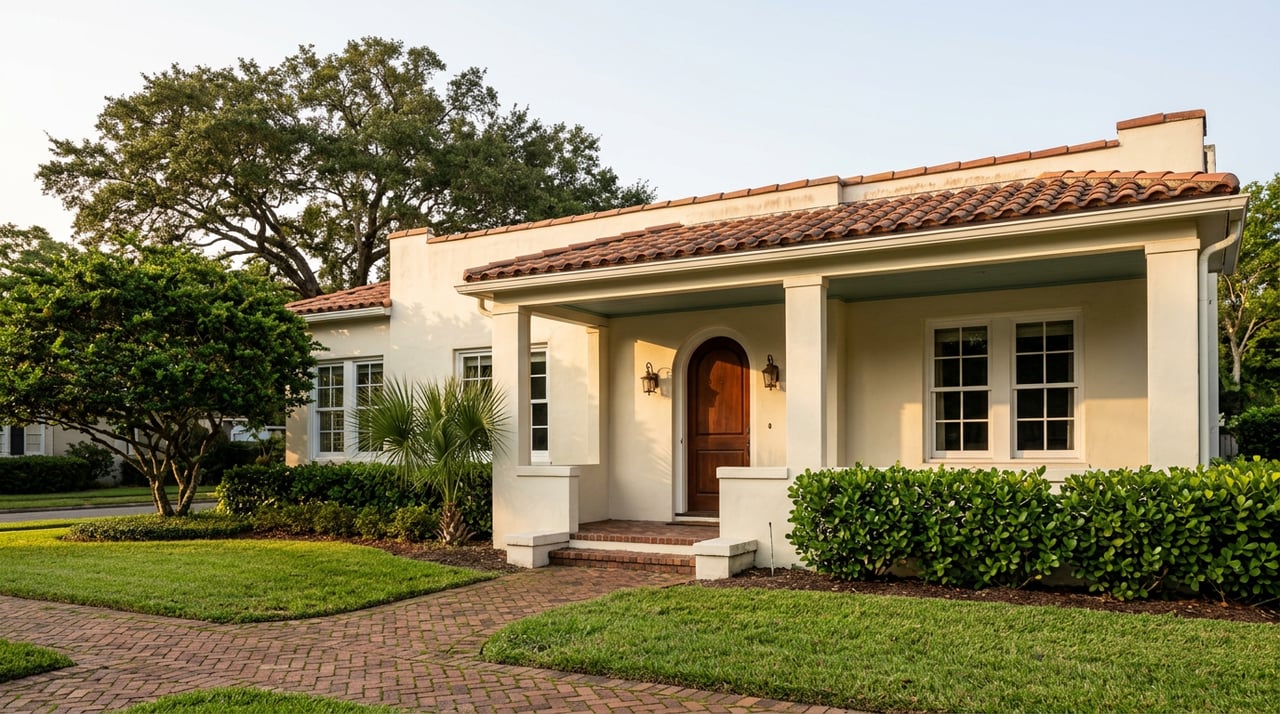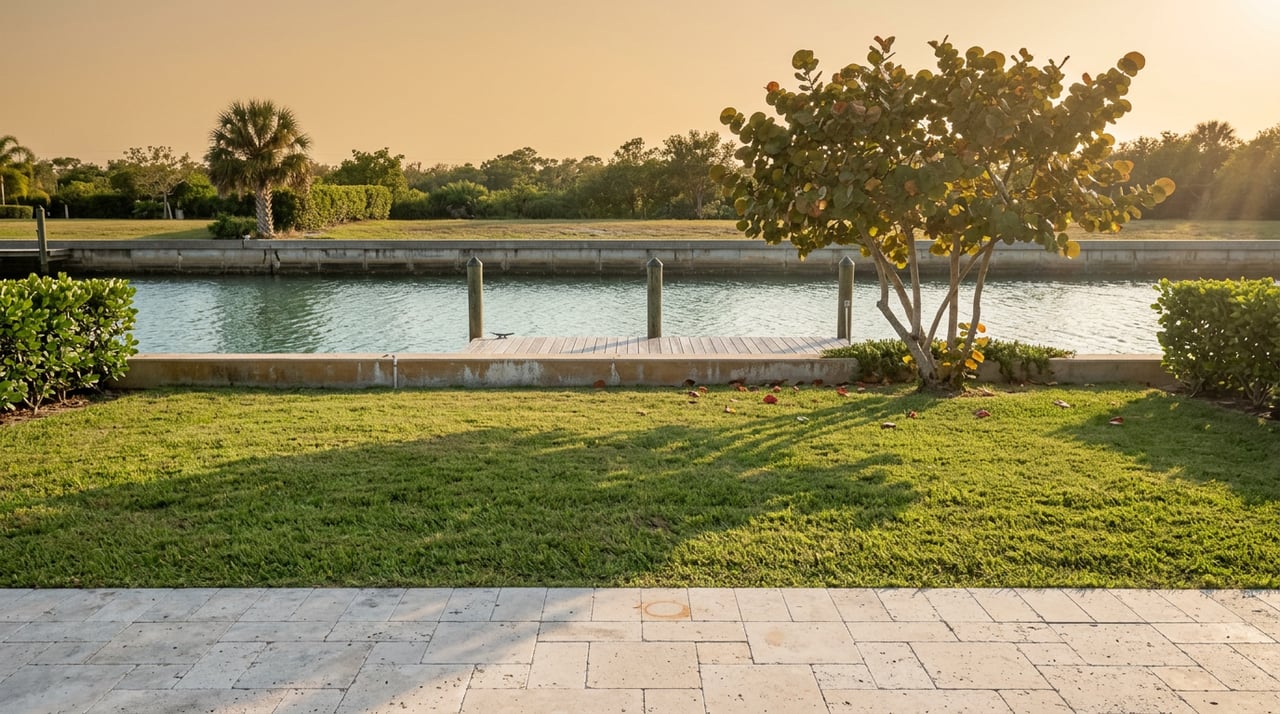
Picture two canal homes in Rio Vista, both built in the 1950s, both a short walk from Las Olas Boulevard, both backed by original seawalls. One seller replaces a cracked cap on a short stretch of wall and moves on with no city involvement at all. The other patches a slightly longer stretch of the same style of wall and finds out mid-project that the repair has legally become a full seawall replacement, with a structural engineer and a permit reviewer now part of the timeline.
Same city. Same era of construction. Same ordinance on the books. What separates those two outcomes has nothing to do with the year on the calendar and everything to do with how much of that wall gets touched.
That distinction gets lost in almost everything written about Fort Lauderdale seawalls. Search around and you'll find a Broward County timeline quoted over and over: 4 feet above NAVD88 through 2035, 5 feet by 2050. Treat that as Fort Lauderdale's own deadline and you'll misjudge the risk on every waterfront property you evaluate here, because the city already moved past it.
The City's Standard Is Already Where the County's Is Headed
Fort Lauderdale adopted an ordinance in 2023 raising its own tidal barrier standard from 3.9 feet NAVD88 to 5.0 feet NAVD88, effective immediately for any new or substantially rebuilt seawall. That isn't a future target. It's the number a plans reviewer checks against right now.
The phased 4-feet-through-2035, 5-feet-by-2050 language that shows up on most contractor and blog sites comes from Broward County's regional resilience policy, the baseline standard adopted by cities that chose not to write a stricter ordinance of their own. Hollywood, Dania Beach, Pompano Beach, Wilton Manors, Oakland Park, and Lauderdale-by-the-Sea operate under that county default. Fort Lauderdale did not join them. It set its own bar at the county's 2050 endpoint and enforced it starting in 2023, nearly three decades ahead of schedule for anyone still comparing quotes across the county line. Delray Beach also wrote its own rule, at 4.2 feet NAVD88 for new construction.
| Jurisdiction | Minimum seawall elevation | When it applies |
|---|---|---|
| City of Fort Lauderdale | 5.0 ft NAVD88 | In effect now, for new or substantially rebuilt walls |
| Broward County default (Hollywood, Dania Beach, Pompano Beach, and similar cities) | 4.0 ft NAVD88, rising to 5.0 ft | 4 ft through 2035, 5 ft by 2050 |
| City of Delray Beach | 4.2 ft NAVD88 | New construction |
If you're comparing a canal lot in Fort Lauderdale to one in Hollywood or Dania Beach on the assumption that both face the same seawall math, they don't. Fort Lauderdale's ceiling is the other cities' 2050 floor.
Three Ways the Requirement Actually Gets Triggered
None of them is a date on a calendar. A Fort Lauderdale seawall is pulled into the 5-foot standard when one of three things happens: the owner builds a brand-new seawall, the owner repairs more than half the length of an existing wall or raises the elevation along more than half its length, or the city issues a citation because the wall is in disrepair or letting tidal water pass through onto the property. Once a citation is issued, the owner has a 365-day window to design, permit, and construct the compliant replacement, with fines starting at $100 a day if that window closes without resolution.
The middle trigger is the one that catches people off guard, because it isn't about age or appearance. A homeowner can decide to patch a crumbling cap on a third of their seawall and stay outside the rule entirely. Cross the 50 percent line on the same wall, intending nothing more than a cosmetic fix, and the whole structure has to come up to 5 feet NAVD88. The trigger is a decision, not a deadline.
Fort Lauderdale backs this with active enforcement rather than a paper policy. Code officers patrol the canals by boat, a purchase the city made specifically for this job at a cost of roughly $58,300, checking wall condition and flagging seawalls that let water breach onto private property during king tides.
The Same Rule Plays Out Differently by Block
Because the trigger depends on the wall's condition and construction history rather than its zip code, identical-looking canal frontage can carry very different exposure depending on which Fort Lauderdale neighborhood it sits in.
- Rio Vista mixes 1950s ranches with contemporary rebuilds along the New River and its tributaries, which means original walls from the Eisenhower era sit a few lots away from recently replaced ones. Entry points here run from around $1.5 million for a renovation project to $6 million or more for a finished custom home on a wide lot, and the seawall's age tells you far more about your compliance exposure than the listing photos do.
- Las Olas Isles was one of two areas the U.S. Army Corps of Engineers specifically modeled for nuisance tidal flooding in its Broward resilience study, because seawalls there have historically run only about 2.5 to 3 feet above NAVD88, well under the 5-foot standard. Overtopping during king tides has been documented here more than almost anywhere else in the city.
- Sunrise Key presents a different problem: narrow lots and tight water access mean raising a seawall to the required elevation often requires barging in equipment, which adds cost and time that a wider, more accessible lot wouldn't face for the same scope of work.
- Newer waterfront construction in areas like Lauderdale Harbours increasingly gets marketed with the seawall as a selling point rather than a liability, with builders highlighting new concrete seawalls constructed above the required minimum from day one, since a compliant wall removes an entire category of buyer due diligence before it starts.
- Harbor Beach, Coral Ridge, and Isla Bahia carry the city's highest waterfront price points, with Coral Ridge's Intracoastal frontage typically listing between $2 million and $10 million depending on lot width and dock configuration, and Isla Bahia's gated point lots running from roughly $3 million into eight figures. At these prices, a seawall assessment is a rounding error on the transaction, but it still shows up in the inspection report and still shapes the negotiation.
What Compliance Costs, and Why Every Estimate Disagrees
Ask three sources what a Fort Lauderdale seawall replacement costs and you'll get three different ranges, and the disagreement is explainable rather than sloppy. Straightforward repair work, patching cracks or replacing a cap, typically runs $100 to $250 per linear foot. Full replacement climbs to $150 to $600 per linear foot, or roughly $15,000 to $60,000 for an average residential wall, with barge access, tieback anchors, and difficult soil conditions pushing well past that on tighter lots like Sunrise Key. Older estimates from just after the 2023 ordinance passed cited a narrower, higher band of $1,200 to $2,000 per linear foot, which would put a 100-foot wall at $125,000 to $200,000. Both figures can be right at once. The gap is scope: a full structural rebuild with sheet piling and new tiebacks costs multiples of a cap repair on the same stretch of wall, and the 50 percent rule is exactly the mechanism that can push a homeowner from one category into the other without warning.
A seawall survey and condition assessment before you ever make an offer runs a small fraction of that, typically in the low thousands, and it's the single cheapest way to know which side of that gap a specific property sits on.
The Clause Already Sitting in Your Contract
If a property lies in a tidally influenced area of Broward County, a specific disclosure has been required in the sale contract itself since December 31, 2020, under Broward County's Code of Ordinances. The clause has to appear in bold, capitalized, fourteen-point type, stating plainly that the property may be subject to minimum tidal flood barrier elevation standards. It's easy to skim past in a stack of closing documents, but it's the county's way of putting seawall compliance in writing before anyone signs.
Appraisers treat wall condition the same way lenders treat any known future liability: as a cost-to-cure. A non-compliant seawall gets priced against contractor estimates to bring it to 5.0 feet NAVD88, and during a transition period like the one Fort Lauderdale is in now, comparable sales with fully compliant walls can be harder to find, which makes the appraiser's job, and the negotiation, more dependent on hard documentation than on nearby comps.
What to Have in Hand Before You Offer or List
- A recent survey referencing NAVD88, since seawall height is measured against that fixed datum rather than against today's visible tide line
- An independent seawall condition assessment, ideally from a marine contractor rather than a general home inspector
- Permit history for the existing wall, including whether any past repair work came close to the 50 percent threshold
- At least one contractor estimate specifying the final top elevation in NAVD terms, not just a repair scope
- Confirmation from the seller or listing agent of the current elevation reading against the 5.0 foot Fort Lauderdale minimum
None of this replaces a licensed survey or a structural engineer's sign-off, but walking into a waterfront offer or listing appointment with these documents already gathered turns a seawall conversation from a surprise into a line item.
FAQ
If a seawall is already built to 5 feet NAVD88, is it protected from future rule changes? Fort Lauderdale's current 5.0 foot standard already matches the endpoint Broward County has set for its phased municipalities by 2050, so a compliant Fort Lauderdale wall today meets the highest benchmark currently on the books for the region. Future policy could still change, but there's no pending local requirement above 5.0 feet at this time.
Who actually enforces this, the city or the county? Enforcement in Fort Lauderdale is a city function. Code compliance officers patrol the canals by boat looking for cracked caps, overtopping, and other signs of disrepair, and a citation starts a 365-day clock to design, permit, and complete compliant repairs before daily fines apply.
Waterfront deals in this city rarely fall apart over the view or the dock. They fall apart, or get renegotiated hard, over a wall nobody looked at closely enough before the ink went on. If you're weighing a canal-front purchase or getting ready to list one, Michelle Nelson can help you line up the survey, the contractor estimate, and the paperwork before that conversation happens at the closing table instead of before it. Schedule a free consultation to start.