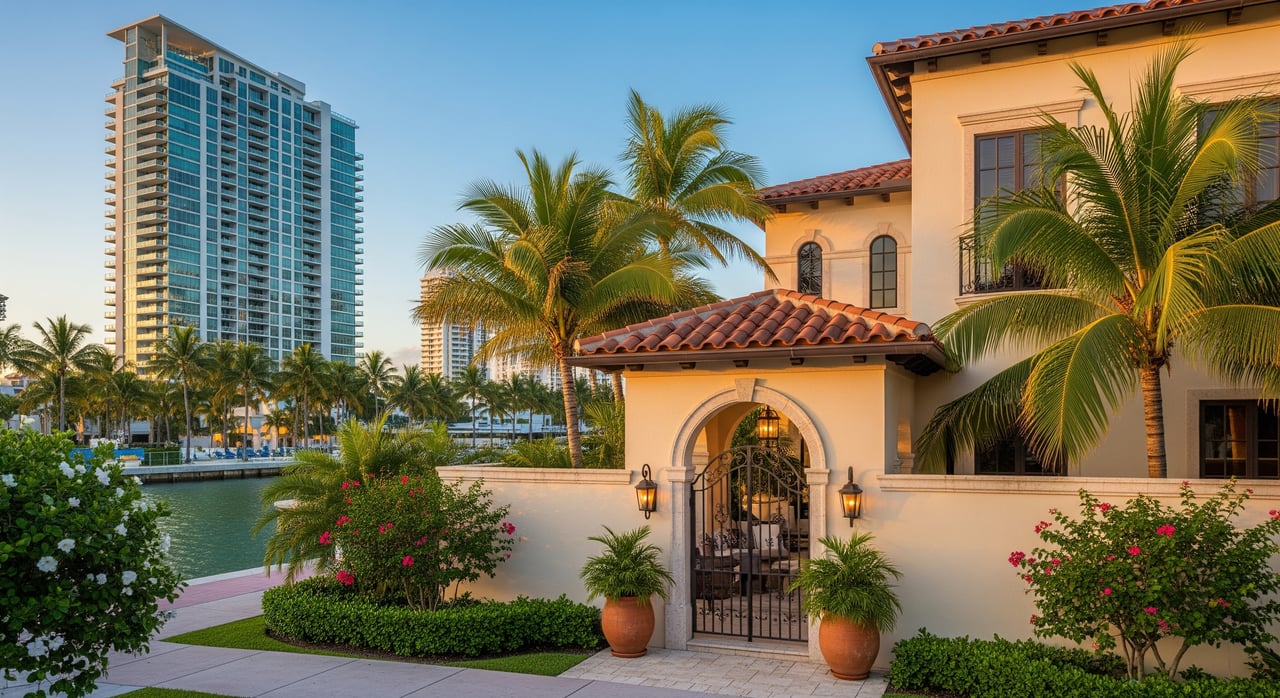
Torn between a glassy high-rise and a front-door townhome in Miami? You are not alone. The right choice shapes your daily routine, budget, and long-term peace of mind. In this guide, you will compare how condos and townhomes work in Florida, what life feels like in different Miami neighborhoods, and the due diligence that matters most in our coastal market. Let’s dive in.
What you actually own
Condo basics in Florida
In a condominium, you typically own the interior of your unit and a share of the common elements like the structure, land, hallways, and amenities. Condos are governed by association documents and Florida’s Condominium Act (Chapter 718). Your monthly fees help fund operations, reserves, insurance for common areas, and services like landscaping or elevators.
Financing can be more complex with condos because lenders often require project-level approval or a condo review. Some loan programs, including FHA and VA, maintain approved project lists. Always confirm early with your lender if the building meets their criteria.
Townhome basics in Florida
Townhome ownership can vary. Many townhomes are fee-simple, so you own the building and the land beneath it. Others are set up as condominiums or part of a common-interest community with a homeowners association governed by Florida’s HOA Act (Chapter 720). HOA responsibilities differ. In some communities, the HOA covers roofs and exterior painting. In others, you handle those items as the owner.
Financing is often simpler for fee-simple townhomes because there is usually no project-level condo approval. Lenders treat many townhomes like single-family attached homes. Still, ask your lender to confirm title structure and HOA requirements for the specific property.
Lifestyle tradeoffs in Miami
Density, privacy, and layout
Condos tend to be higher density in Miami, especially in areas like Brickell, Downtown, and Miami Beach. Expect vertical living, smaller interiors, and more neighbors nearby. Townhomes are typically low-rise, multi-level, and have a private entry. Many buyers prefer the “house-like” feel, with more separation from shared spaces.
Amenities and services
Condos often come with robust amenities like pools, fitness centers, and on-site management or valet services. Your monthly fees reflect that convenience. Townhome communities may offer a pool or small park but rarely have full-service staff. You may handle more exterior tasks depending on the HOA.
Parking and storage
Condo buildings usually offer assigned parking or valet, and some include storage lockers. In townhomes, you are more likely to have a private garage or driveway. That can make EV charging and extra storage easier.
Walkability and transit
Many condo buildings sit in walkable areas near transit like Metrorail and Metromover. If you want to step out for coffee or a run on the waterfront, that can be a big plus. Townhomes are more common in residential pockets such as Coconut Grove, parts of Coral Gables’ fringes, and suburban areas across Miami-Dade. You may drive more, but you gain space and privacy.
Quick lifestyle guide
- Choose a condo if you want turnkey living, on-site amenities, and an urban routine with minimal exterior upkeep.
- Choose a townhome if you want multi-level living, a private entry, and more control over exterior elements, often with a small yard or patio.
Costs, fees, and insurance in Miami
Purchase price and market context
Prices vary widely by neighborhood, building age, and proximity to the water. Newer high-rises often command a premium. Older towers may look attractive on price, but they can carry higher fees or assessments if major repairs are needed. Townhome pricing depends on location and HOA scope. Always compare the price to the monthly carrying costs and the building or community’s financial health.
HOA and condo fees
Monthly fees cover operations, reserves, common-area insurance, and amenities. In high-rise waterfront buildings, fees tend to be higher due to staffing and maintenance needs. Special assessments can arise for significant repairs like roofs, façade work, or structural upgrades. Townhome HOAs can also assess owners, but the scope depends on what the HOA covers versus the owner.
Ask for recent budgets, reserve studies, and meeting minutes to understand how well the community plans for big-ticket items. Associations with healthy reserves can better handle future repairs.
Insurance essentials
Miami is high risk for wind and hurricanes. Insurance costs can reflect that risk and may have higher named-storm deductibles. In a condo, the association policy usually covers the building exterior and common elements. You would carry an HO-6 policy for your interior, personal property, and loss assessment coverage. Verify the association’s coverage limits and deductible structure so you are not surprised by pass-through costs after a storm.
For townhomes, your policy often needs to cover the structure and interior, similar to a single-family home, but it depends on the ownership structure. Flood risk is another key factor. If the property is in a FEMA-designated flood zone, your lender may require flood insurance. Budget for those premiums and confirm coverage requirements with your lender and insurance agent.
Taxes and homestead
Florida has no state income tax, but property taxes are local. If you live in the home as your primary residence, you can apply for a homestead exemption that reduces your taxable value. This applies to both condos and townhomes when they are owner-occupied primary residences.
Financing differences
Condos may require additional project approvals. If you plan to use FHA or VA financing, check whether the project is approved or if a review is possible. Townhomes that are fee-simple often have a more straightforward path. Talk to a lender experienced with South Florida condo reviews, wind and flood insurance requirements, and the documentation associations must provide.
Safety, inspections, and building age
Post-2021 scrutiny
After the Surfside tragedy in 2021, building maintenance and reserves are under closer review across South Florida. You should ask for engineering reports, inspection histories, and details on recent structural work, like roof or balcony repairs. Review association minutes for discussion about deferred maintenance or planned projects that could lead to assessments.
Condo inspection priorities
Look beyond the unit. Consider the building’s structure, concrete spalling, visible cracks, façade and waterproofing, roof condition, elevators, and parking garage drainage. Inside the unit, focus on window and door seals, HVAC age, plumbing condition, and any signs of moisture or mold. Ask your inspector to review any available building-level engineering documents.
Townhome inspection priorities
For townhomes, prioritize the roof age and warranty, exterior cladding, foundation or settling signs, grading and drainage, and termite treatment history. If living areas are at ground level, check elevation, flood claims, and any water intrusion issues.
Specialized inspections
In South Florida, consider mold, termite, and wind mitigation inspections. For older buildings or flood-prone areas, request an elevation certificate and ask about historical claims. These steps help reveal true risk and ongoing costs.
Renting and resale
Short-term rental rules
Short-term rental regulations vary across Miami-Dade municipalities. Many condo associations restrict or prohibit short-term rentals. Even if a city allows them, your association documents may not. Confirm city and county rules, association rental caps, minimum lease periods, and any licensing or tax requirements before you buy.
Resale considerations
In urban hotspots, condos can be very liquid in strong markets. That said, building reputation, fee levels, litigation, and assessments can strongly affect demand and pricing. Townhomes attract buyers who want more space and fee stability. If you aim for long-term homestead status, the townhome path can feel simpler. Always weigh neighborhood trends, association health, and the long-term maintenance outlook when you evaluate resale potential.
Your practical buyer checklist
Documents to request
- Declaration, Bylaws, and Rules and Regulations
- Latest annual budget and last 2 to 3 years of financial statements
- Current reserve study and reserve funding policy
- Board and association meeting minutes from the last 12 to 24 months
- Insurance certificates for the association and unitowner requirements
- Details on current or pending special assessments
- Litigation disclosures involving the association
- Recent building inspection or engineering reports
- Rental policies and occupancy rules
- For townhomes: CC&Rs showing roof, exterior, and yard maintenance responsibilities
Questions for the HOA or management
- What does the association insurance cover, and what is the deductible?
- Are there pending or planned capital projects? Any anticipated assessments?
- Are there current or recent code violations or structural concerns?
- What are the rental and short-term rental policies?
- How are reserves funded, and when was the last reserve study?
Questions for your lender and inspector
- For condos, is the project FHA or VA approved, or will a project review be required?
- What insurance amounts and endorsements are needed for wind and flood?
- Ask your inspector to review building-level reports for condos, and to focus on roof, drainage, and exterior systems for townhomes.
Which fits your lifestyle?
Choose a condo if you want
- A lock-and-leave routine with on-site amenities
- Urban convenience near dining, shops, and transit
- Lower day-to-day exterior maintenance
- Staffed services like doorman, concierge, or valet, if available
Choose a townhome if you want
- A private entry and a more “house-like” feel
- Multi-level living and easier storage or EV charging
- A small yard or patio, depending on the community
- More control over exterior elements and fewer shared walls
Smart next steps in Miami
Get preapproved with a lender who regularly finances Miami condos and townhomes. As you shortlist properties, request association documents early to spot any red flags. Ask about reserves, insurance deductibles, and scheduled projects. For waterfront or older buildings, dig deeper into structural and waterproofing history. If you plan to rent, confirm municipal rules and association restrictions before you write an offer.
If you are comparing neighborhoods across Miami and nearby South Florida communities, a local advisor can help you weigh tradeoffs that do not show up in listing photos. From HOA budgets to flood zones, a steady plan and the right team will help you buy with confidence.
Ready to compare your short list and map out a smart offer strategy? Connect with Michelle Nelson for a friendly, data-minded consultation and a tailored path to your Miami condo or townhome.
FAQs
What is the main ownership difference between condos and townhomes in Florida?
- Condos typically include ownership of the unit interior plus a share of common elements, while many townhomes are fee-simple and include the structure and the land beneath the unit.
Are condos harder to finance than townhomes in Miami?
- Often yes, because many lenders require condo project reviews or approvals, while fee-simple townhomes are usually financed like single-family homes.
How do HOA or condo fees compare in Miami?
- Condos can have higher monthly fees due to staffing and amenities, while townhome fees vary based on what the HOA maintains, such as roofs, exteriors, or landscaping.
What inspections should Miami condo buyers prioritize?
- Review building-level engineering reports and focus on structure, façade, waterproofing, elevators, parking garages, and unit-level moisture, HVAC, and window seals.
Do Miami short-term rental rules differ for condos and townhomes?
- Yes. Municipal regulations vary, and many associations restrict or prohibit short-term rentals, so you must confirm both city rules and HOA documents.
Does Florida’s homestead exemption apply to condos and townhomes?
- Yes, if the property is your primary residence and you file with the county, you may receive a homestead exemption that reduces your taxable value.